The operators involved in the rope jump activity that led to the death of 21-year-old Maria Eduarda Rodrigues de Freitas have told police they still cannot explain how the young woman was launched from a bridge without the required safety ropes attached.
According to testimony obtained by Brazilian outlet g1, one of the employees under investigation said safety checks were routinely carried out before every jump and insisted the team remains baffled by what happened.
“In her case, we still don’t understand it to this day,” the employee reportedly told investigators.
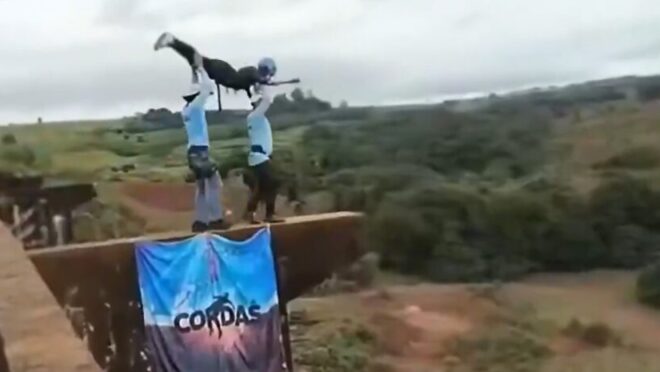
Maria Eduarda died on June 13 after jumping from Skeleton Bridge in Limeira, in the interior of São Paulo state. Police say she should have been secured by two safety ropes before the jump, but neither was attached when she was released from the platform.
Authorities are currently investigating the actions of three employees who were responsible for the operation. According to lead investigator Andrea Levy, all three remain in custody and have told police they cannot remember who was responsible for installing or inspecting the safety equipment before Maria Eduarda’s jump.
One employee described what happened after the fall, saying he went down to where the victim had landed and saw emergency efforts already underway.
“I was on the bridge, then I went down there. A nurse was already performing CPR, and when the rescue team arrived, I went back up,” he reportedly said.
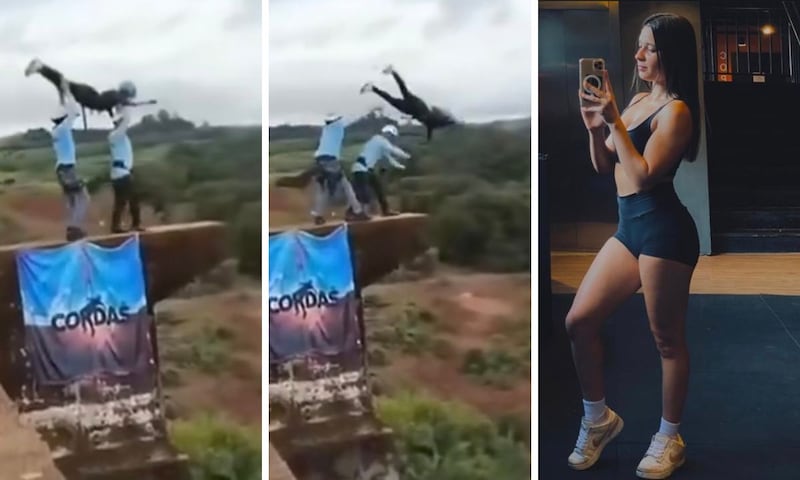
Another worker told investigators that responsibility for attaching and checking the ropes was shared among team members rather than assigned to a specific person.
“Sometimes one person installs the ropes and another checks them. Other times someone else verifies everything. That was basically how it worked,” he said.
When investigators asked who should have attached or inspected the ropes before Maria Eduarda’s jump, the employee answered simply: “I don’t remember.”
The workers described the tragedy as an accident and insisted no one intended for anyone to be harmed.
“It was really a tragedy. Nobody leaves home intending to do something like this or kill someone,” one employee said. “Everyone there is passionate about extreme sports. They’re people who love what they do.”

The same employee admitted that the team still struggles to understand how such a critical oversight could have happened.
“We say we don’t understand because the rope is visible. It’s hard to understand how nobody saw it wasn’t there,” he said.
However, as investigators continue examining the circumstances surrounding the fatal jump, a witness has come forward with allegations that appear to raise additional questions about what happened after the accident.
Rafael Goulard, an educational coordinator who was waiting in line to take part in the activity, told local media that he witnessed an employee from the company, Entre Cordas, remove the camera Maria Eduarda had been wearing to record her jump.

According to Goulard, the scene unfolded shortly after the 21-year-old plunged approximately 40 meters from the bridge without proper safety equipment.
“The first thing I remember seeing was one of the employees removing the GoPro camera from around the neck of the body that was already lying on the ground,” Goulard told EPTV.
He questioned why the device was removed, asking: “Was he worried about the equipment, trying to hide evidence, or concerned about its financial value?”
The witness claimed he saw the employee descend into the valley where Maria Eduarda had fallen and retrieve the camera that had been attached to her body.
His account has become particularly significant because police later reported that the camera could not be found when officers arrived at the scene after being alerted to the accident.
Investigators subsequently reviewed available footage and confirmed that Maria Eduarda was wearing a camera at the time of the jump. Yet when questioned by police, employees reportedly said they did not know where the device was.
Authorities conducted searches around the area but have not recovered the camera.
The contrasting accounts have now become part of the broader investigation. While the employees maintain they do not understand how the safety ropes were not attached and deny knowing what happened to the camera, a witness alleges he personally saw an instructor remove the device from the victim moments after the fatal fall.
Police are now investigating both the circumstances that led to Maria Eduarda being launched without safety ropes and the unexplained disappearance of the camera she was reportedly wearing when the accident occurred.
The case is being treated as homicide with eventual intent, a legal classification in Brazil that applies when someone is considered to have knowingly accepted the risk that their actions could result in death, even if there was no direct intention to kill.